The database tables have been updated on 12th June 2026
The database tables 157g, 157h, 157k, 157i and 157j have been corrected. For technical reasons, the table sum data has been multiple in some cases.
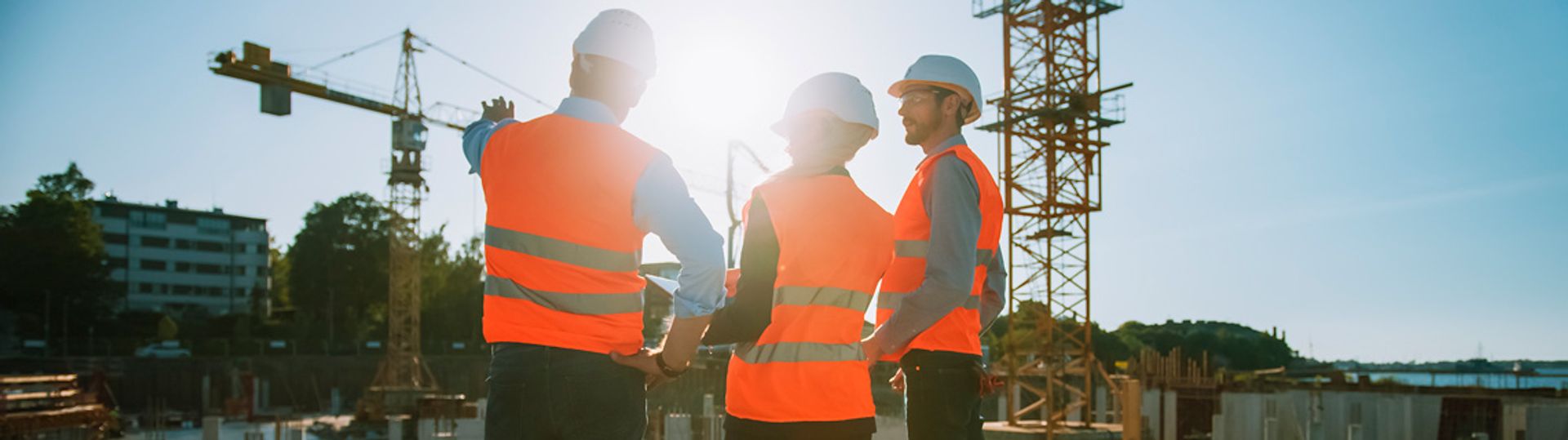
Building investments can be examined by means of the volume index of newbuilding and more exact data derived from it.
Building investments can be examined by means of the volume index of newbuilding and more exact data derived from it, which are available from 1995 onwards.
The section on building investments comprises partly of previously unpublished data. The database has completely new indicators, with which building investments can be followed from a new perspective.
The main purpose of the volume index of newbuilding is to measure the relative change in the volume between two periods. The volume index of newbuilding and its sub-indices give constructors, developers and producers and sellers of building materials an accurate picture of the volume and changes of ongoing newbuilding.
By following investments in newbuilding, topical information is gained about the development of newbuilding and its division into professional and own-account building and residential building and other construction.
You can view the content of the tables by means of model tables. The latest data are not shown in the model tables.
The database tables 157g, 157h, 157k, 157i and 157j have been corrected. For technical reasons, the table sum data has been multiple in some cases.
A building refers to any independent structure permanently constructed or erected on its site. It has its own entrance and contains covered space intended for different purposes, usually enclosed within outer walls or walls separating it from other structures. A multi-purpose building is a building which has space for different use purposes, such as residential and business premises. Caves and other subterranean spaces which are mainly enclosed within rock or similar walls and/or which do not contain structures comparable to the interior structures of buildings proper, for , example, underground oil tanks, are not buildings. Stalls, kiosks and so on that do not contain space separated by closed walls, and transportable caravans, ships and so on are not classified as buildings.
An index is a ratio describing the relative change in a variable (e.g. price, volume or value) compared to a certain base period (e.g. one year). The index point figure for each period tells what percentage the given examined variable is of its respective price, value or volume in the base period. The mean of the index point figures for the base period is 100.
Newbuilding is considered to be newbuilding subject to a building permit, extension of buildings and a change comparable to re-construction. Newbuilding produces new space either entirely in the form of new building construction, extensions made to existing buildings or a re-constructed building. Construction, which produces new space, a new construction or a new building (Kira glossary).
The calculation of newbuilding production is based on ongoing newbuilding projects (work-in-progress) during the review period. The volume index of newbuilding describes the constant-price value of newbuilding in the review period in relation to the value of the base year. In the volume index, building production is priced at the prices of the index base year. The average value for the index base year is indicated with the point figure 100. The latest monthly published index in production is called the volume index of newbuilding 2010=100. For example, the index point figure 112 indicates that the volume of newbuilding has grown by 12 per cent from the base year. In addition to the volume change, the change of the volume index includes changes in the quality of construction, such as changes in time in the planning solution of different building types. The improvement of quality has a rising effect on the volume index and the weakening of quality a falling effect.
The intended use of a building is determined according to the purpose for which the largest part of the gross floor area of the building is used. The statistics on building and dwelling production cover all categories according to the Classification of Buildings 2018:
01 Residential buildings
02 Free-time residential buildings
03 Commercial buildings
04 Office buildings
05 Transport and communications buildings
06 Buildings for institutional care
07 Assembly buildings
08 Educational buildings
09 Industrial and mining and quarrying buildings
10 Energy supply buildings
11 Public utility buildings
12 Warehouses
13 Rescue service buildings
14 Agricultural buildings and livestock shelters
19 Other buildings
The change is calculated in relation to the previous corresponding period. The change is expressed in percentages.
The year-on-year change is a change compared to the corresponding period of one year before. The change is expressed in percentages.
The price index of newbuilding construction describes the price of ongoing building production in a certain period. The price index of newbuilding is derived implicitly as a ratio of current-price and constant-price production, whereby contract prices of different periods and locations are emphasised timely with weights corresponding to the production shares at the time.
The basic starting point for the calculation of new orders in new building construction is the newbuilding projects in progress during the review period. When building projects started during the review period are separated from these and their production costs occurring in future are summed up, we get an indicator describing the value of new orders.
The anticipated value and volume of building production to be implemented in future can be calculated as the sum of the value of all building production under construction at the moment and of the remaining building production of these projects during the review period. This value sum can be considered an indicator describing the stock of orders.
If you wish to subscribe to access to the database, please email us at yhteiskuntatietopalvelut@stat.fi. In your message, indicate the relevant database or databases and the organisation for which access is requested. We will send you the agreement for signing. When the agreement has been returned to us, we will send you the identifiers within a few days.
The subscription is continuous. The service will be invoiced for the first time within one month of the subscription and after that each calendar year. Statistics Finland has the right to review the prices.
The annual fee for a database access licence is EUR 1250. VAT of 25.5 per cent will be added to the prices if the customer is liable to pay VAT.
The price for joint orders of several customers is defined separately and an offer can be requested from yhteiskuntatietopalvelut@stat.fi.
| Database | Price/year |
|---|---|
| Building production | EUR 1,250 |
| Building investments | EUR 1,250 |
| Building and real estate costs | EUR 500 |
| Housing prices | EUR 500 |
| Building stock and construction | EUR 500 |
| Entire service | EUR 2,000 |
Statistical database
Most detailed area level: Municipality
The database provides information on granted building permits, and started and completed building projects. Building production data can be used to examine the state and development of construction in the whole country and by area.
Statistical database
Building cost indices describe the price development of production inputs used in building construction. The index of real estate maintenance costs describes the average development of real estate maintenance costs in the whole country.
Statistical database
Most detailed area level: Municipality
The service contains data on the prices per square metre of sold old dwellings in housing companies and single-family houses, changes in prices and numbers of transactions.
Statistical database
Most detailed area level: Municipality
The Building stock and construction database contains data on the building stock in active use and on renovation building and building production.